Article 32
 Article 32
 30-12-1950 Mao Zedong Remarks on the Trade Union Work Report from the Northwest Bureau The main aspects of article 32 are in state-owned enterprises, worker participation in administration through factory committees shall be established. Private enterprises shall adopt collective contracts between trade unions and employers, ensuring benefits for both labor and capital. During this period, a standard eight to ten-hour workday shall generally be enforced in public and private sectors, subject to discretion in special circumstances. Minimum wages shall be set by local governments based on prevailing conditions. Labor insurance will be gradually introduced, prioritizing the protection of juvenile and female workers. Industries and mines will undergo inspections to enhance safety and sanitation.
 27-08-1952 GAC Unified Registration Measures for the Unemployed

| Year | Total population* | Urban (%) | Workers & employees** | Industrial workers** |
|---|---|---|---|---|
| 1949 | 542 | 10,6 | 7.977 | 3.059 |
| 1950 | 552 | 11,2 | 10.166 | 3.386 |
| 1951 | 563 | 11,8 | 12.705 | 4.379 |
| 1952 | 575 | 12,5 | 15.656 | 5.263 |
| 1953 | 588 | 13,3 | 18.069 | 6.121 |
| 1954 | 602 | 13,6 | 6.370 |
| Year | total | female | Percentage |
|---|---|---|---|
| 1949 | 8.004.000 | 600.000 | 7,5 |
| 1950 | 10.239.000 | ||
| 1951 | 12.815 | ||
| 1952 | 15.804.000 | 1.848.000 | 11,7 |
| 1953 | 18.256.000 | 2.132.000 | 11,7 |
| 1954 | 18.809.000 | 2.435.000 | 12,9 |
soon after the founding of the PRC, the CCP started organizing and mobilizing women. For example, the Baotou Municipal Women’s Committee held its first meeting in December 1949. They coordinated with the outgoing GMD government to develop a work plan and build up Baotou. The committee's main tasks included engaging with women at all levels, understanding their conditions, and promoting the party's policies. They established local women's committee offices in every village and town to integrate women into the national military-industrial project. The committee played a crucial role in integrating women and shaping their identities, celebrating heroines from both Han and Mongolian backgrounds. They organized study groups to highlight examples of virtuous, revolutionary women and branded those who opposed the women’s movement as counterrevolutionaries for failing to follow Mao Zedong’s thought and respect the party’s leadership.
| Year | 1949 | 1950 | 1951 | 1952 | 1953 | 1954 |
|---|---|---|---|---|---|---|
| Wage | 262 | 322 | 379 | 446 | 496 | 519 |
| Index | 100 | 123 | 145 | 170 | 189 | 198 |
| % change* | 23 | 18 | 18 | 11 | 5 |
we should implement the ten-hour work system and the progressive piecework wages system [jijian leijin gongzizhi] so as to raise work enthusiasm and increase production. The eight-hour system is something to be implemented in future with the development of large-scale industry. At present we should universally implement the ten-hour system and make employees understand that this is a requirement of the War of Resistance. An egalitarian system of wages destroys the distinction between skilled labour and unskilled labour and the distinction between industriousness and laziness, thus lowering work enthusiasm. We can only stimulate labour enthusiasm and increase the quantity and quality of production by replacing it with a progressive piecework wages system In this passage, Mao is not only supporting the general proposition that a differentiated wage system was economically efficient, but he is actually advocating the adoption of progressive piece-rate systems - systems which were bound to lead to extreme income differentiation within enterprises, since progressive piece-rate systems involve the payment of progressively higher unit rewards as more is produced. In the 1950s, even at the height of reforms, progressive systems were considered too inegalitarian and were consistently ignored in favour of constant and diminishing rate systems. Howe page 59-60
| Year | Outstanding Groups | Outstanding Workers | ||
|---|---|---|---|---|
| Total | Men | Women | ||
| 1949-1952 | 19.000 | 208.000 | 182.000 | 26.000 |
| 1953 | 15.000 | 155.000 | 134.000 | 21.000 |
| 1954 | 17.000 | 234.000 | 215.000 | 19.000 |
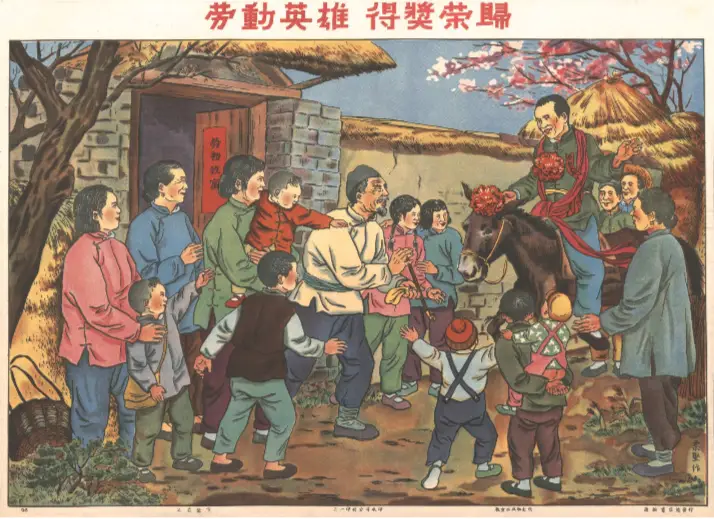
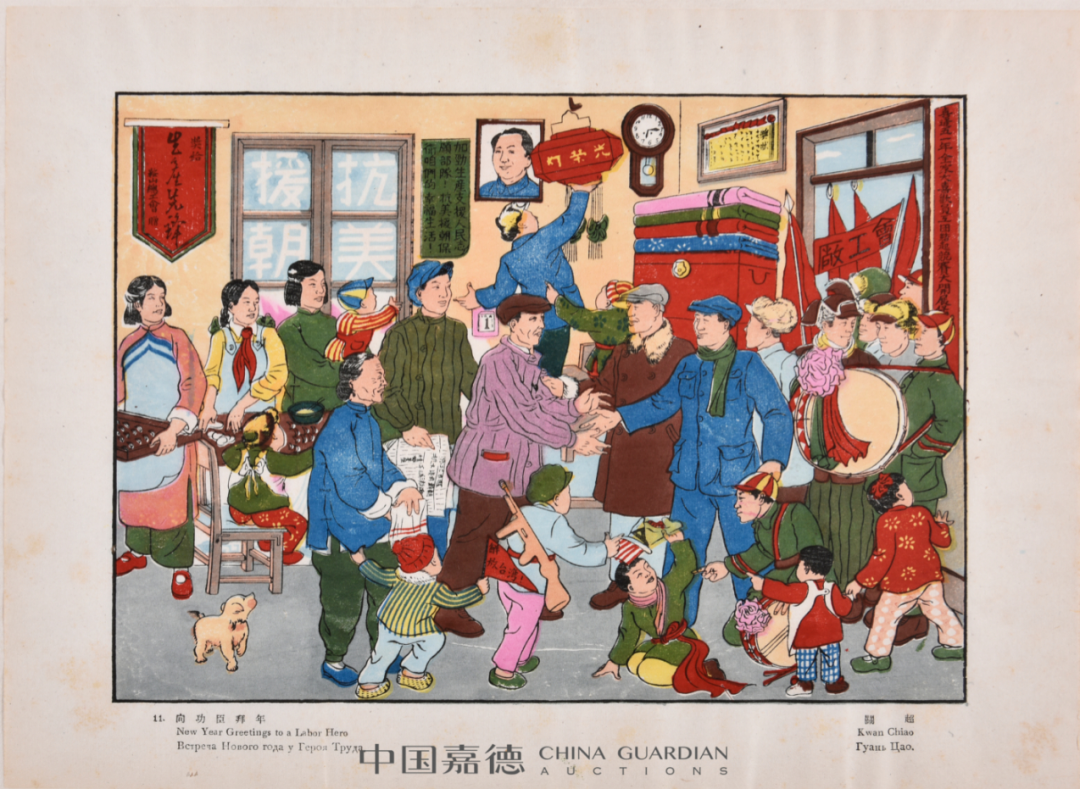

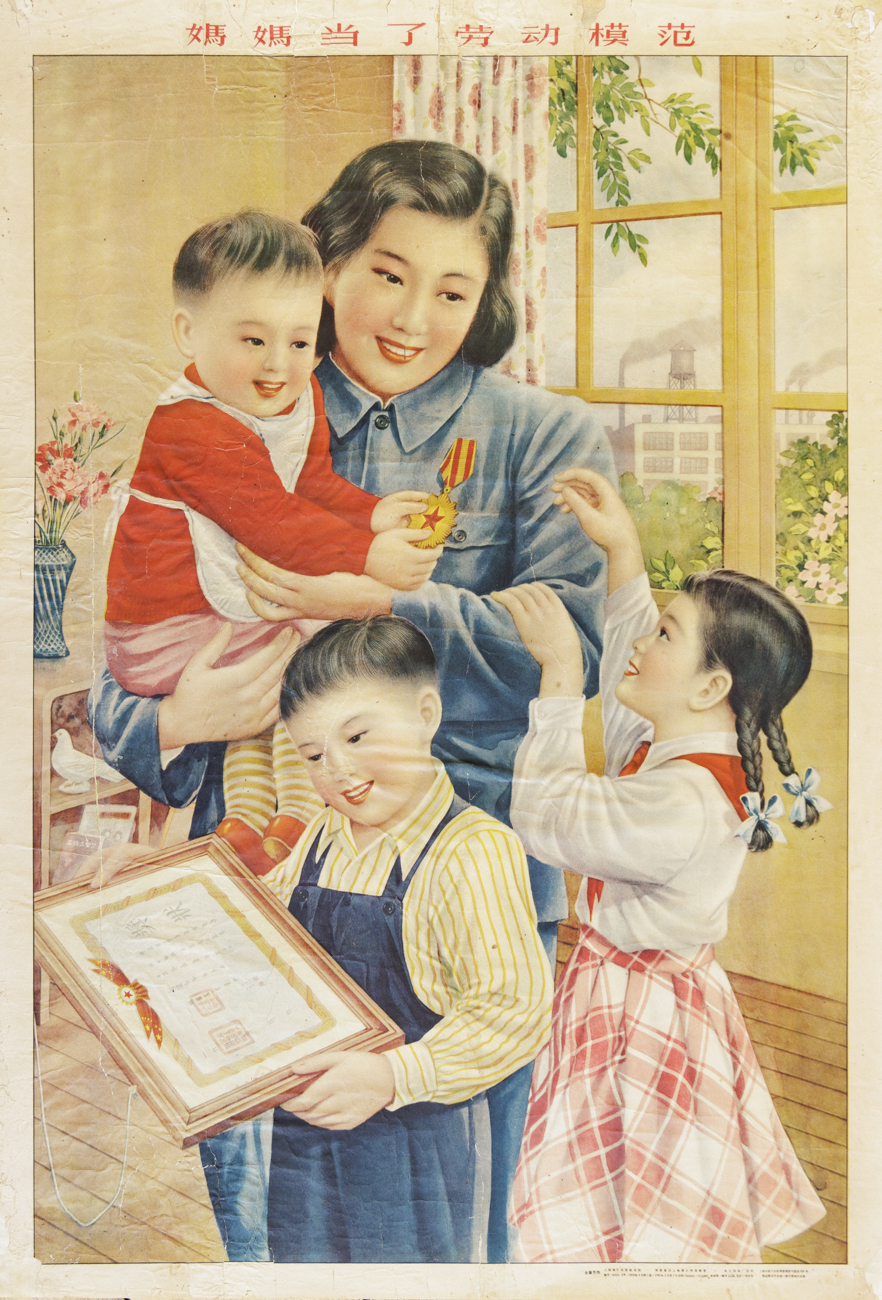
09-09-1950 Mao Zedong Regarding the Remarks on the Issue of Relief for Unemployed Workers
17-01-1951 GAC issued a circular on the precautions to be taken when sending unemployed workers back to their hometowns for production
12-01-1951 Supplementary Instructions of the GAC on the Treatment of Unemployed Intellectuals
25-07-1952 Decision on labor and employment issues
27-08-1952 GAC Unified Registration Measures for the Unemployed
31-10-1952 Measures for Handling Unemployed Workers
24-11-1952 Application for Returned Overseas Chinese and Refugees in Guangzhou City, Guangdong Province Labor and Employment Registration Measures
" The need to restore production, and perhaps the economic innocence of the Party in 1949-51, produced m uch propaganda urging women out to work. The first note of caution was sounded in 1952 when, partly because of the crisis in business confidence which followed the anti-corruption movement, unemployment soared. The State Council issued a document which divided the unemployed into various categories, of which housewives who wished to work were acknowledged to be one.35 The Women’s Federation was urged to seek out such women, make inquiries as to their degree of need, qualification, and experience, and, in suitable cases, help them to find jobs. However, it was m ade quite clear that for the m oment there was no hope of jobs for all who wanted them , and the docum ent pointed out that housework was not to be despised since it had now a far greater significance than in the old society. Six days later, the Women’s Federation issued a directive, couched in very much the same terms, directing all its branches to implement the decision of the State Council.37 Both documents pointed out that the W om en’s Federation could do educational work amongst women which would be useful in case of their eventual em ployment." 37: Directive of the All-China Democratic Women’s Federation to all levels of the organization to co-operate in the implementation of the decisions on employment of the State Council ofthe Central People’s Government’ RMRB (10 Aug. 1952). Davin (1976) Pages 168-169
| Year | Unemployed population* | Unemployed rate % |
|---|---|---|
| 1949 | 4.742 | 23,6 |
| 1952 | 3.766 | 13,2 |
| Size of employement | number of industrial enterprises | number of production workers* |
|---|---|---|
| below 100 persons | 1.687 | 57 |
| 100-500 persons | 686 | 151 |
| 500-1.000 persons | 145 | 104 |
| 1.000-5.000 persons | 130 | 252 |
| over 5.000 persons | 14 | 189 |
| unknown | 15 | n a |
| Total | 2.677 | 753 |
| Year | State owned work units |
Collective work units |
Individual businesses |
Rural Labour | Total |
|---|---|---|---|---|---|
| 1952 | 1580 | 23 | 883 | 18243 | 20729 |
| 1953 | 1826 | 30 | 898 | 18610 | 21364 |
| 1954 | 1881 | 121 | 742 | 19088 | 21832 |
| Year | Productive investment* |
Non-productive investments** | |
|---|---|---|---|
| Other Non-productive | Housing | ||
| 1950 | 65 | 24 | 11 |
| 1951 | 65 | 24 | 11 |
| 1952 | 66,9 | 22,8 | 10,3 |
| 1953 | 58,6 | 28,9 | 12,5 |
| Year | 1949 | 1952 | 1955 |
|---|---|---|---|
| State and cooperatively operated | 15,5 | 25,1 | 34,3 |
| Public and private jointly operated | 1,2 | 2 | 5,5 |
| Total Socialist & semi socilaist | 16,7 | 27,1 | 39,8 |
| private capitalistic industry | 18,3 | 16,3 | 9,3 |
| Individual handicraft | 65 | 56,6 | 50,9 |
| Total industry | 100 | 100 | 100 |
The insurance company is directly led and managed by the head office of the People's Bank of China, and the capital is proposed to be 20 billion yuan. Regional companies will be established in the locations of the People's Bank of China. The Northeast Insurance Company owned by the Northeast Bank is placed under the leadership of the People's Insurance Company of China. The main tasks are: (1) to ensure production safety, to support the development of trade, and to promote the exchange of materials between urban and rural areas; to improve the welfare of the working people; to defend national property. (2) The state-run insurance company must lead the private insurance company to jointly realize the above tasks, and replace the government to implement the administrative management of the business operation of the private insurance company, reform the pure profit concept and various unreasonable business methods of the private company, and overcome the past dependence on foreign companies. (3) Regarding the issue of accumulating funds, the first is to complete political tasks. (4) At present, attention is mainly paid to the construction, development and expansion of the state-run insurance business, gradually establishing companies at all levels, developing business, accumulating experience, and cultivating talents.


| Year | Enjoying labour insurance | Enjoying public medical services |
|---|---|---|
| 1952 | 3.000 | 4.000 |
| 1953 | 4.830 | 5.496 |
| 1954 | 5.380 | 5.666 |

| Year | total employees |
women | man | with social insurance |
without social insurence |
right to free medical care |
without right free medical care |
|---|---|---|---|---|---|---|---|
| 1952 | 15.804.000 | 1.848.000 | 13.956.000 | 3.300.000 | 12.504.000 | 4.000.000 | 11.804.000 |
| 1953 | 18.256.000 | 2.132.000 | 16.124.000 | 4.830.000 | 13.426.000 | 5.496.000 | 12.760.000 |
| 1954 | 18.809.000 | 2.435.000 | 16.374.000 | 5.380.000 | 13.429.000 | 5.666.000 | 13.143.000 |


The CCP had good relations in Shanghai however, this could not prevent economic and social chaos. See

| Year | Location | No. of people | Cause | Form of protest |
|---|---|---|---|---|
| 1949-1950 | Shanghai* | Unclear | Compensation | Locked managers in their office |
| End 1949 | Shanghai | Unclear | Wages | Control of the premises. |
| end 1949 | Shanghai | 27 | Factory control | Spontaneous action |
| 1952.2 | Shanghai | Unclear | Wages | Riot |
| 1952.9 | Shanghai | About 30 | Autocratic management | Riot |
| 1953.1 | Taiyuan | 328 | Welfare benefits | Collective petition |
| 1953.3 | 501 | Wage reduction | Refused to attend political studies | |
| 1953.3 | 1133 | Autocratic management | Collective petition and demonstration | |
| Unclear | Wage reduction | Collective petition and demonstration | ||
| 1953.3 | A city in Northwest China | 4000 | Work relocation | Riot |
| 1953.4 | Taiyuan | 289 | Demand for permanent employment status | Collective petition |
| About 30 | Wages | Collective petition | ||
| Unclear | Anti-bureaucratism | Collective petition | ||
| 1954.1 | Jiangsu | 78 | Cancellation of bonuses | Slow down |
| 1954.5 | Chongqing | A large number of unemployed workers | Unemployment | Riot |
| 1954.11 | Tianjin | Unclear | Unemployment | Riot |
| 1954.11 | Jiangsu | Unclear | Wage reduction | Strike |
16-05-1951 Liu Shaoqi Letter to Gao Gang on the Issue of Establishing Party Committees in State
 00-12-1942 Mao Zedong Economic and financial problems in the anti-Japanese war. 7. On the development of self-supporting industry
05-02-1949: Memorandum of conversation between Anastas Mikoyan and Mao Zedong and
03-02-1949 Cable, Joseph Stalin to Anastas Mikoyan giving instruction to the CCP about controlling the majority of the working class
00-12-1942 Mao Zedong Economic and financial problems in the anti-Japanese war. 7. On the development of self-supporting industry
05-02-1949: Memorandum of conversation between Anastas Mikoyan and Mao Zedong and
03-02-1949 Cable, Joseph Stalin to Anastas Mikoyan giving instruction to the CCP about controlling the majority of the working class