The basic principle for the economic construction of the People's Republic of China is to develop production and bring about a prosperous
economy through the policies of taking into account both public and private interests, of benefiting both labour and capital, of mutual aid between
the city and countryside, and circulation of goods between China and abroad.
The state shall coordinate and regulate state-owned economy, co-operative economy, the individual economy of peasants and handicraftsmen, private
capitalist economy and state capitalist economy, in their spheres of operations, supply of raw materials, marketing, labour conditions,
technical equipment, policies of public and general finance, etc.
In this way all components of the social economy can, under the leadership of the state-owned economy, carry out division and co-ordination of
labour and play their respective parts in promoting the development of the social economy as a whole.
The foundational economic policy of the early PRC was an integrative model seeking to blend public and private interests, coordinate labour and capital, and link urban and rural sectors. The state-owned economy was meant to lead, coordinating all sectors—state, cooperative, private, and individual enterprises—in key areas like production and finance to achieve cohesive national development and equitable distribution.
The new government inherited a challenging economic reality in 1949: a highly underdeveloped, fragmented, and agrarian structure. The economy was split between a largely subsistence agrarian interior, semi-industrialized coastal enclaves, and the heavy-industry-focused Northeast (Manchuria). Compounding this were the structural limitations of Confucian political economy, which historically prioritized agriculture and viewed commerce and industry with suspicion, discouraging modernization.
To unify and modernize, the PRC adopted sweeping changes, including the nationalization of major foreign and GMD-aligned industries. While private ownership was temporarily maintained in small and medium enterprises, the ultimate goal was socialist transformation. Crucially, the economic strategy heavily relied on the Soviet model, which was embraced due to the failure of prior Western-influenced efforts and the perceived success of the SU. This led to a reliance on Soviet aid for industrialization, a shift to Soviet-style technology and accounting, and the implementation of a centrally planned, yet initially moderate, approach to agricultural reform. This structural and ideological shift was a complex negotiation between the desire for a modern, industrial future and the legacies of a deeply entrenched past.
|2|Introduction...
Article 26 of the Common Program outlines the foundational principles guiding the economic policy of the newly established PRC. It articulates a vision of economic development rooted in a balanced integration of public and private interests, the harmonization of labour and capital, and the reciprocal support between urban and rural sectors. Additionally, the policy encourages international trade as a mechanism to support national growth. Central to this framework is the role of the state, which is tasked with coordinating and regulating the operations of diverse economic forms—including state-owned, cooperative, private, and individual enterprises. These sectors were expected to function in alignment, particularly in domains such as production, resource allocation, marketing, labour standards, and fiscal policy, under the overarching leadership of the state-owned economy. This integrative model was conceived not only as a mechanism for equitable distribution but also as a strategy to promote cohesive national economic development.
At the inception of the PRC in 1949, the new government inherited a fragmented economic structure comprising three largely disconnected regional economies. In the interior, a predominantly subsistence agrarian economy persisted, shaped by centuries of traditional agricultural practices and limited market integration. Along the eastern seaboard, particularly in Treaty Port cities (see Article 55), semi-industrialized enclaves had emerged under foreign influence, primarily geared toward light industry and export-oriented trade. In the northeast, the Manchurian economy—heavily industrialized under Japanese occupation—was centred on large-scale heavy industry and mineral extraction. The challenge of economic unification and integration across these distinct systems was a defining task of the early PRC leadership.
A critical analysis of China's prewar economic structure reveals several key insights. First, while foreign imperialism imposed constraints, it did not wholly obstruct the process of economic modernization; rather, development proceeded in a selective and uneven manner. Second, although certain elements of industrial growth and infrastructural expansion were present, institutional weaknesses—including the absence of coherent national policies, ineffective governance, and fragmented markets—limited the scale and impact of modernization efforts. Third and most consequentially, the stagnation of the agricultural sector served as a significant bottleneck, impeding broader economic transformation and reinforcing structural underdevelopment. An essential cultural and ideological dimension influencing economic behaviour and policy in China was the enduring legacy of Confucian political economy. As the dominant socio-philosophical system for over two millennia, Confucianism profoundly shaped Chinese views on governance, social order, and economic roles. Its emphasis on hierarchical relationships, respect for authority, moral conduct, and the primacy of the family unit provided a stable framework for imperial administration and societal cohesion. However, this same ideological stability was accompanied by a marked conservatism that often resisted structural innovation. The prioritization of social harmony and adherence to traditional roles may have curtailed receptiveness to economic disruptions associated with industrialization and capitalist transformation.
Confucian doctrines also constructed a moral hierarchy of occupations that deeply influenced economic priorities. Agriculture was extolled as the most virtuous and essential economic activity, while commerce, industry, and manual crafts were frequently viewed with ambivalence or even suspicion. These sectors were often regarded as morally inferior or potentially destabilizing, capable of fostering luxury, inequality, and social dislocation. Consequently, this normative bias likely exerted a constraining effect on state policy and intellectual attitudes, discouraging investment in trade and industrial infrastructure, and limiting the social legitimacy of entrepreneurial activity. Talented individuals may have been dissuaded from pursuing careers in commerce or manufacturing, further entrenching the agrarian orientation of the economy.
The cumulative effect of these cultural, institutional, and structural dynamics was a persistent underdevelopment of non-agricultural sectors and a resistance to the transformative changes required for sustained modernization. The post-1949 economic strategy of the PRC, therefore, must be understood not merely as a technocratic response to material conditions, but as a complex negotiation with inherited historical legacies, ideological continuities, and deeply embedded socio-economic hierarchies.
Stages of industralization
Source: Buchanan (1970) Page 233 1. the ‘original developed area’ of the coastal belt and the Northeast, with the
major industrial centres; 2. the expansion towards the interior districts of central and
north-central China during the First Five Year Plan and the cities of ‘pivotal construction’ which developed as major industrial bases during this period
|3|Chinese economic situation in 1949...
While subsequent sections of this study explore the economic policies of the PRC in greater detail, it is essential to first contextualize the economic situation of the Chinese mainland at the time of the Communist victory in 1949. The Chinese economy at the dawn of the PRC was markedly underdeveloped, fragmented, and heavily agrarian in structure. Industrial activity was concentrated in a limited number of coastal cities and Manchuria, with much of the interior remaining economically stagnant and infrastructure chronically underdeveloped. The national industrial landscape was characterized by small-scale, labour-intensive enterprises, many of which lacked mechanization or efficient organization. The most modern sectors—particularly those involved in finance, shipping, textiles, and rail—were disproportionately under foreign control, often through enterprises located in treaty ports such as Shanghai, Tianjin, and Guangzhou. This spatial and structural imbalance between coastal urban centres and the rural hinterland accentuated regional inequalities and impeded economic integration. Approximately 90 percent of the population was engaged in agriculture, which remained the dominant sector well into the early years of the PRC. During the early 1950s, the Communist Party adopted a cautious approach toward rural reform. Farmers largely retained autonomy in cropping decisions, with state involvement limited to setting relative price ratios for certain cash crops and grain varieties. This policy, though initially moderate, had clear strategic objectives—especially the incentivization of cotton production for the textile sector. Hebei Province, for instance, witnessed a 5.4% increase in cotton acreage and a 210% rise in output by 1952 relative to pre-war levels. However, between 1953 and 1957, the state imposed compulsory delivery quotas for major agricultural goods. Despite these demands, farmers were permitted to sell surplus produce on the market, reflecting a transitional model that blended socialist planning with remnants of market logic. The dominance of agriculture reflected a broader lack of economic diversification. Compared to economies with substantial industrial and service sectors, China’s agrarian structure translated into lower productivity and constrained economic modernization. Industrial production, where it existed, remained focused primarily on consumer goods. In 1952, only 26 percent of factory output was attributed to producer goods, while similar trends held for handicraft industries.
Fig. 26.1 Shares of Capital and Consumer Goods
in Total Gross Industrial Output 1949-1954
Source: Cheng (1971). Page 25
Modern industrial capacity was largely absent outside of key urban nodes and the heavy-industry complexes of Manchuria. In provinces such as Jiangsu and Guangdong, economic activity centred around traditional agriculture and small-scale commerce. Western China, with the partial exception of wartime Chongqing, had not experienced significant industrialization. The deficiency in industrial development was compounded by inadequate transportation infrastructure; notably, Sichuan—a province comparable in size to France—had no railway network aside from a limited coal line in Chongqing.
Industry
To rehabilitate the national economy, the new Communist government undertook sweeping institutional changes. Key among these was the nationalization of foreign-owned enterprises and large-scale industries controlled by Guomindang-aligned capitalists. Yet, private ownership of small and medium enterprises was preserved during this early stage, as such businesses were seen as essential to national recovery and as potential allies of the revolution.
Chen Boda delivered this speech in February 1949. The speech primarily focuses on the strategies and policies for the takeover and management of large-scale industrial enterprises formerly owned by the GMD and the bureaucratic capitalist class. He states
"The reason why we oppose disrupting the original enterprise structure is that it is an economic and production organization, not a political one. ... What can we do first after taking over this organization? That is: to put all the technicians, foremen, accountants, and all other officials under the supervision and leadership of the People's Liberation Army and the new democratic state power led by the working class, to get all the machines running, rather than disrupting it or destroying it. What we are mainly adding there now is to send representatives to supervise and lead production and prevent sabotage."
Preexisting economic difficulties, combined with GMD raids and the blockade around Shanghai, as well as deep uncertainty about the immediate future, led central CCP leaders to offer few promises of rapid social improvement. In March and again in June 1949, Liu Shaoqi instructed the regional bureaus of the Central Committee to refrain from committing the Party to major reforms until further directives were issued. This caution at the center generated frustration and uncertainty among many local cadres regarding the objectives of Party rule and almost certainly cost the CCP political support in both urban and rural areas. For Liu and his circle of economic and financial specialists, however, prudence was indispensable to the survival of the revolution. In their assessment, meaningful economic growth would not begin until two to three years after the end of the civil war, during which time the new Communist regime would remain highly vulnerable to domestic counterrevolution and imperialist pressure.
The level of industrial modernization in pre-1949 China can also be gauged through the trajectory of indigenous engineering development. This progression occurred in three discernible phases:
1. Post-Opium Wars Era (after 1842): Chinese scholars and officials began translating Western scientific texts, founding technical academies, and experimenting with basic industrial technologies. However, these efforts often retained a Confucian epistemological framework and were therefore limited in their transformative potential. Furthermore, the imposition of unequal treaties following the Opium Wars constrained state sovereignty, subjected domestic markets to foreign domination, and diverted national energies away from endogenous industrial growth. 2. The Self-Strengthening Movement (1861–1895): This Qing dynasty initiative aimed to modernize China's military and industry through selective adoption of Western technologies. While it yielded arsenals, shipyards, and educational institutions, the movement ultimately faltered due to entrenched conservatism, fragmented authority, and fiscal constraints. Its emphasis on military hardware over broader economic reform limited its transformative impact
3. Interwar Industrial Policy (1920s–1930s): During the Nationalist government’s tenure, particularly the Nanjing decade (1927–1937), attempts were made to institutionalize industrial policy. The Ministry of Industry introduced regulatory frameworks to support business development, and universities increasingly offered structured curricula in engineering and science. However, the impact of these reforms was undermined by recurring civil conflict, regional warlordism, and escalating Japanese aggression, all of which destabilized the foundations of long-term economic planning.
Despite brief periods of relative stability, particularly under Chiang Kai-shek's government, these reform episodes failed to reverse the long-term structural stagnation of the Chinese economy. The warlord era (1916–1928) disrupted trade and fragmented administrative control, while World War II and the civil war drained state resources and decimated infrastructure. As a result, by 1949, China remained a predominantly rural society with a bifurcated economy and a limited industrial base.
Figure 26.3 shows China's relative economic position with several major world powers around 1900 and 1930. This comparison clearly demonstrates the extent to which China lagged behind the major global powers in terms of economic development by the turn of the 20th century and in the lead-up to World War II.
Fig. 26.3 Comparative GDP (PPP) of China and Major World Powers (circa 1900 & 1930)
Country
GDP (PPP) in Billions of 1990 international $ (circa 1900)
Per Capita GDP (PPP) in Billions of 1990 international $ (circa 1900)
GDP (PPP) in Billions of 1990 international $ (circa 1930)
Per Capita GDP (PPP) in Billions of 1990 international $ (circa 1930)
By 1947, 55 universities, including 33 engineering institutes, supported China’s modern engineering education and industrial policy.
Article 43 of the Common Program makes a statement about the target of the development of science and technology. Yet, planned development of scientific and technological ideas were absent.
However, from the perspective of the social and economic structure, after almost one hundred years’ development, Chinese modem industrialization still lagged behind and China was still an underdeveloped agricultural country. In 1949, Chinese industry as whole only contributed 15.5% of the gross value of the national industrial and agricultural output, with heavy industry taking only 4.5%. The apparent ease with which Mao's China adopted the Soviet economic model was not due to its proven track record. Instead, the model's appeal lay in the absence of viable alternatives. Previous attempts to break China's cycle of poverty and underdevelopment throughout the 19th century had yielded limited results. Moreover, the "demonstration effects" of the Great Depression, which discredited Western capitalism, coupled with the Soviet Union's triumph over Nazi Germany and the subsequent geopolitical division of the world, significantly lowered the perceived risks associated with implementing a Stalinist economic system. Essentially, the lack of success of other models, and the perceived success of the Soviet model created a situation where the risks were deemed to be lower.
Fig. 26.4 Gross domestic product per capita by province in 1953
Source: Bramall (2009) Page 64
Although figure 26.4 gives an impression of the situation in 1953, it shows clearly the spatial difference in development.
In 1953, China's per capita GDP was 142 yuan, with significant regional disparities. Shanghai, the most developed area, boasted a per capita GDP of nearly 600 yuan. Wealthier provinces generally possessed abundant resources and low populations, like Gansu and Inner Mongolia, or had benefited from pre-1952 industrialization, notably Manchuria. Conversely, the southwest region was exceptionally poor, with Sichuan, Guizhou, Hunan, Guangxi, and Yunnan ranking as the five lowest provinces. These areas, despite large populations, suffered from severe industrial underdevelopment. At the Central Committee meeting on March 5, 1949, Mao outlined the economic strategy as follows: first, the confiscation of all GMD government assets, estimated at between $10 billion and $20 billion; second, cooperation with urban and rural capitalists, who held the second largest share of China’s modern industries; third, devising methods to modernize and collectivize the fragmented, individual economies of agriculture and handicraft production; and fourth, swiftly asserting control over foreign trade and the broader economy. See Article 37
Industry
Following the 1949 communist victory, China relied heavily on the Soviet Union as its main supplier for rebuilding its war-torn industry and economy. However, this dependence was complicated by the legacy of China's technological development. Many factories inherited by the communist regime were originally built with Western machinery and adhered to Western operational standards. The new regime insisted these factories adopt Soviet technological and operational norms. The transition was further complicated by the influence of Western and Japanese industrial practices, as many Chinese industrial elites were trained in these systems. The process of transferring Soviet technology in the early 1950s thus became a contested political and institutional challenge, shaped by national policies, local contexts, and historical influences. While a few major industrial projects received substantial Soviet support, most regional factories experienced Soviet influence indirectly, as a political and institutional transformation rather than a purely technological or economic shift. Local forces often played a decisive role in shaping the adaptation to Sovietization. China's early industrialization differed from the Soviet Union's in a crucial way: it relied heavily on external aid. The Soviet Union provided China with significant assistance, including funding, technology, personnel, and equipment, which were vital for establishing China's industrial base. Without this support, it would have been exceedingly difficult for China to industrialize so rapidly, even by adopting the Soviet method of primitive capital accumulation at the expense of its agricultural sector.
While China's emulation of the Soviet land reform model was successful with Soviet assistance, it's debatable whether this approach was the most economically efficient or suitable for the country in the long run.
|4|Handicraft & rural industry...
Rural industrialization in China faced a complex dilemma. While seen as a means to improve rural livelihoods, it was also perceived as diverting crucial labor from agriculture. When industrialization was pursued, the emphasis was heavily placed on developing heavy industry in economically underdeveloped regions.
This focus on heavy industry in "Third Front" provinces (Sichuan, Guizhou, Yunnan, Shaanxi, Gansu, Qinghai,
Ningxia, Henan, Hubei, Hunan and Shanxi), evidenced by a surge in basic construction investment from 24% in 1952 to 34% in 1957, inevitably led to the neglect of traditional light industries. This neglect resulted in the decline of certain proto-industries, such as traditional paper-making in Sichuan.
Rural economy
Furthermore, this policy had significant spatial implications. Regions that had previously thrived in light industry during the Republican era, such as Guangdong, were disproportionately overlooked. Not a single 156 major project initiated during the First Five-Year Plan was located in Guangdong. This pattern of neglect extended within provinces as well, with traditional centers of light industry, like Sunan and the Pearl River Delta, receiving significantly less attention.
Fig. 26.5 Growth of industrial production, 1949–1954
Year
cloth
sugar
cigarettes
coal
electricity
steel
cement
1949
1890
200
1600
32
4300
158
660
1950
2520
240
1850
43
4600
610
1410
1951
3060
300
2000
53
5700
900
2490
1952
3830
450
2650
66
7300
1350
2860
1953
4690
640
3550
70
9200
1770
3880
1954
5230
690
3730
84
11000
2230
4600
growth rates
17
27
17
19
21
53
36
Source: Bramall (2009) Page 92 Growth rates are per cent per annum. Data are in thousand tonnes except for cloth (million metres),
cigarettes (thousand cases) and electricity (million kwh)
The industrialization campaign launched after 1949 produced striking gains in both producer and consumer goods. Output of steel, coal, and cement rose sharply, with steel production growing at an average annual rate of about 28 percent between 1952 and 1955. Consumer manufactures such as cigarettes, textiles, and sugar likewise expanded significantly compared with pre-1949 levels. Although the devastation of war created a very low starting point, the speed of recovery and the surpassing of previous peak outputs indicate that the industrialization drive was highly effective. At the same time, the exceptionally rapid growth seen in 1952 was in large part a rebound from wartime collapse, and the strong structural imbalances of the 1950s economy made pronounced year-to-year fluctuations unavoidable.
The trajectory of consumer-goods industries depended not only on capital investment but, more critically, on access to raw materials. Because 80–90 percent of the inputs for these industries came from agriculture, their expansion was inevitably constrained so long as agriculture was assigned a relatively low priority in development strategy.
Five “small” industries—fertilizer, cement, machinery, iron and steel, and energy (including coal and hydropower)—were located predominantly in rural areas and relied on domestically developed technology. Together, they underpinned the economic foundations of socialist China and enabled Mao’s strategy of self-reliance. Among these, the fertilizer sector is generally regarded as the most successful in supporting agricultural production. In terms of production scale, large and medium facilities were operated under central control within the planned economy framework, while small-scale plants were administered by local governments.
From a technological perspective, potash fertilizer production was relatively straightforward, as its principal component, potassium chloride, occurs naturally and is largely obtained through mining. Phosphate fertilizer manufacturing was also comparatively simple, involving the reaction of phosphate rock with sulfuric acid.
Production processes in AB plants during the Mao era were uncomplicated. Coal—readily available in China—served as the principal raw material. AB plants could be built without high-grade steel and were easy to construct. Although AB was an inferior fertilizer, its very low cost made it accessible to poor peasants. Small-scale fertilizer production, including ammonia and AB fertilizers, was generally owned and operated by local (mainly county-level) governments, whose management practices broadly followed central policy guidelines.
In the cement industry, bottle kilns could be constructed and run with minimal technical requirements, even by peasants with little formal education. Their construction and operation costs were low, making them highly affordable. Although the resulting cement was of poor quality, this did not present major difficulties in rural areas, where it was used largely for reservoirs, irrigation canals, and similar projects.
For agricultural machinery, production and supply were likewise handled by local governments, which also provided basic components and major repair services. The general orientation of local industrial policy under the First Five-Year Plan—particularly in the locally coordinated sector—closely followed the principles set out in the 1951 directive. This sector was tasked primarily with supporting agricultural production and meeting rural consumption needs, corresponding to the directive’s emphasis on “sectoral allocation.” In terms of production methods, local industries were encouraged to utilize waste outputs from centrally administered enterprises and to develop alternative and substitute sources of raw materials. Implicit in these guidelines was a clear objective: to minimize competition with the large-scale central industrial sector for scarce resources.
Section VII of the First Five-Year Plan For Development Of PRC-1953-1957 is dedicated to handicraft. It states
"China's handicrafts play an important part in
meeting the needs of the people in town and countryside, and especially in meeting the peasants' demands for farm tools and daily necessities. They also play a very definite role in meeting the needs of our export trade. Working on the principle of achieving a proper balance and co-ordination both on a national scale and locally, we should guide handicraft production according to plan, see that the necessary materials are available, encourage initiative in serving agricultural production and the daily needs of the rural and urban population. At the same time, we must protect handicrafts involving special skills, and improve and raise the level of specialized handicraft production. "
When the CCP assumed power, China’s handicraft sector remained larger than its modern industrial sector.
"Scattered, individual agriculture and handicrafts, which make up 90 per cent of the total value of
output of the national economy, can and must be led prudently, step by step and yet actively to
develop towards modernization and collectivization; the view that they may be left to take their own
course is wrong. It is necessary to organize producers', consumers' and credit co-operatives and
leading organs of the co-operatives at national, provincial, municipal, county and district levels."
Local handicraft industry mainly consisted of more than 30 types, including ironwork, woodworking, bamboo weaving, pottery, writing brushes, brick and tile making, leather making, umbrella making, weaving and dyeing, sewing, fishing nets, firecrackers, food processing, paint making, and papermaking. Official statistics for 1952 indicate that craft industries accounted for 6.6 percent of net domestic product, compared to 9 percent generated by factory production. Handicrafts employed approximately 7.4 million workers, while modern industry employed about 5.3 million. These figures likely understate the true scale of the handicraft sector. Alternative estimates place handicraft employment in 1952 at as high as 13.5 million, compared to only 3.5 million factory workers. Official data also highlight the sector’s predominantly rural character: in 1952, roughly 60 percent of all registered artisans were located in the countryside.
Rural industrialization is often considered a defining characteristic of Chinese socialism under both Mao and his successors. However, it's less commonly recognized that this didn't emerge in a vacuum. A significant degree of rural industrialization already existed in China before 1949, though it primarily consisted of unmechanized "proto-industries"—small-scale, decentralized, and household-based operations. Modernizing governments, including both the GMD and CCP regimes, generally viewed these existing rural industries as obstacles to their vision of industrial modernity, which was centred on mass production in urban factories.
Handicraft
Maoist policy further complicated this landscape by prioritizing local grain self-sufficiency and discriminating against communities that relied on specialized production and exchange. The mandate for all rural people to grow their own grain—a policy stemming from the simplified notion that rural inhabitants were solely "peasants" in an undifferentiated countryside—had uneven consequences. While some localities could leverage this to their economic advantage (initially in grain, then cash crops and modern industry), others were forced to abandon their comparative advantages and engage in low-yield farming on marginal land.
Take, for example, the handicraft papermaking industry in Jiajiang county, Sichuan. Communities in such areas had historically specialized in crafts to compensate for challenging natural environments, much like many upland regions.
Ohter examples can be found in many villages in Jiangsu Province, sericulture had long been a crucial source of household income. Rice cultivation on scarce arable land was insufficient to meet either subsistence needs or cash requirements. Jiangsu’s dense network of waterways and its close connections to major towns and Shanghai provided ready outlets for village-produced raw silk. As demand for high-quality silk expanded and technologies enabling standardized thread production were introduced, these household-based activities were increasingly centralized in factory settings equipped with new machinery. Although nominally organized as cooperatives, these factories were in practice managed by specially trained personnel and staffed by a largely proletarian workforce. While this shift entailed social adjustments within village communities, factory employment remained an important source of cash income for rural households.
A similar dynamic existed in Shandong Province, where a low land-to-person ratio before 1949 compelled villagers to seek supplementary livelihoods. Many temporarily left their villages to work as carpenters or stonemasons, take factory jobs in urban centres, or peddle handicrafts produced by family members. Wealthier peasants often operated enterprises within their villages, in nearby market towns, or even in Qingdao. Brick and tile production was especially prominent, as was large-scale rice milling in more prosperous localities.
Shandong’s textile merchants developed a labour-intensive drawn-work sector as an alternative to mechanized production. Leveraging strong global demand for handcrafted textiles, they relied on abundant, low-cost skilled labor rather than capital investment. Coastal access, established embroidery traditions, and adaptable artisans enabled integration into international markets, creating a competitive export industry despite Western dominance in mechanized lace production.
The production system subordinated craftswomen through a decentralized yet hierarchical structure dominated by middlemen, who controlled production terms and extracted profits by underpaying piece rates. Multiple intermediaries further reduced earnings despite long hours. Yet the system persisted because its flexibility allowed rural women to balance domestic duties while accessing rare opportunities for cash income.
After 1949, Shandong’s drawn work industry entered a transitional phase (1949–1951) marked by limited state intervention and coexistence of private and socialist structures. Within the PRC’s dual-path industrialization strategy, it generated export earnings and mobilized rural female labor, supporting heavy industry. From 1952 to 1956, marked a period of strong state intervention in handicraft production, stronger state control integrated the sector into cooperatives, though initial policies constrained merchants and limited development.
Several forms of early rural industrial activity appeared across much of China. Agricultural processing, construction-material production, and handicraft manufacturing took place both at the household level and in more centralized rural sites. These goods circulated not only to major cities but also within local markets, contributing to local economic growth directly through sales and indirectly by stimulating associated commercial and service activities.
However, Maoist policies often penalized these already disadvantaged communities, sometimes with disastrous outcomes. Rural industries were also viewed with suspicion because they were associated with the rich peasant economy, speculation, and illicit gains. It was believed that suppressing them would lead to a more rational economic order and greater equality.
Rural handicraftsmen were rural by residence, they belonged to one of the standard rural classes: landlord, rich peasant, middle peasant, poor peasant or hired farm hand. These were household labels, unchangeable, inheritable and valid for all members. The CCP exhibited limited sympathy toward artisans as a distinct social group. Much like peasants, artisans were regarded as petty proprietors who owned their means of production and were therefore seen as inclined toward the “daily, hourly, spontaneous, and large-scale reproduction of capitalism and the bourgeoisie.” In a 1953 speech, Liu Shaoqi drew a firm distinction between artisans and the proletariat, stating that artisans were “not yet part of the working class” and therefore could not join trade unions. While acknowledging that members of handicraft cooperatives performed useful and honorable work for the nation and the people, Liu emphasized the need to clarify their social status: they were laboring people, entitled to participate in cultural life—such as visiting Workers’ Culture Palaces, attending night schools, or going to the cinema—but not to enjoy the organizational rights reserved for industrial workers.
Under certain conditions, individuals could be classified as workers (gongren), small artisans (xiao
shougongyezhe), or industrialist-merchants (gong-shangyezhe).
Fig. 26.6 Number of handicrafts workers by commodities 1954
Source: Soofi (2024). Page 137
Handicraft production can be categorized into distinct types based on their skill and tool requirements and class status:
▉Basic Handicrafts
At the most basic level, the skills and tools needed are so minimal that there's no necessity for occupational specialization or even commodity production. These handicrafts are often performed as domestic subsistence activities, supplementing other forms of subsistence or commodity production. The production included hand weaving, shoe and rope making, charcoal and paper manufacturing, pottery, carpentry, and tailoring. The quality was low and was not to be sold. This was particularly common among peasant households, at least until 1957, who engaged in many such "subsistence activities." If the economic status of such independent handicraftsman improved so that he finally hired more workers, and his own labor gradually became of secondary importance, then his class status would become that of the national bourgeoisie.
▉Intermediate Handicrafts
For intermediate handicrafts, the skill and tool requirements are complex enough to warrant occupational specialization and commodity production, even if only in a rudimentary, part-time form (e.g., a peasant-craftsman). However, these requirements are still limited enough that they don't lead to individual specialization within the production process or a corresponding social division of labour. A craftsman in this category typically owns their means of production and practices their craft individually or with family, possibly with the help of a journeyman or apprentice. The Chinese Communists referred to these as individual handicrafts, classifying any establishment with fewer than four gainfully occupied persons (including family members) as such.
▉Advanced Handicrafts
At the highest level, the skill and tool requirements are considerably more complex, usually necessitating at least some individual specialization and social division of labour within the handicraft production process. Production is organized in handicraft workshops, which require capital investments beyond the means of most individual craftsmen. Historically, the majority of establishments in this range were small capitalist handicraft workshops, employing at least four but fewer than ten gainfully occupied individuals, including proprietors, their assisting family members, and wage-labourers.
Generally, the greater the skill and tool requirements, and the corresponding degrees of individual specialization and social division of labour in handicraft production, the higher the value and surplus value generated per craftsman.
These different levels of technical advancement and social organization in handicraft production necessitate distinct approaches to technical change and socialist transformation, all aimed at achieving complete socialist industrialization.
▉Capitalist handicraft workshops They were already capitalist in nature, must be converted into industries. This required the expropriation of handicraft capitalists, who will then rely on wage income. The Chinese Communists believed this could be achieved through a gradual process of "utilizing, restricting, and reconstructing," a strategy applied to all members of the national bourgeoisie.
▉Individual craftsmen They were not yet capitalists and hadn't reached the workshop stage. They were engaged primarily in such subsistence industries as
smithery, carpentry, weaving, pottery-making, and tanning. But they sometimes manufactured relatively luxurious products: silk cloth, shoes, metal
utensils, and furniture. Most of them worked in cities. They needed to advance in a non-capitalist manner under Communist rule. This transformation, according to the CCP, was best accomplished through a phased collectivization process. This would begin with joint tool groups, progress to marketing cooperatives and small handicraft groups, and culminate in handicraft production cooperatives. These cooperatives would then evolve into cooperative factories or handicraft workshops, turning the craftsman-cooperator into a wage labourer, thus completing the transition to a socialist distribution system.
Finally, cooperative handicraft workshops are to be developed into modern industries.
For example, during the early 1950s, tailoring practices shifted markedly. Tailors increasingly abandoned the traditional model in which customers brought their own cloth to be cut and sewn to individual specifications. Instead, tailors became integrated into a state-directed industrial-commercial system, purchasing fabrics from state-owned wholesalers and producing standardized types of garments. Opportunities to operate independently of this system diminished substantially. By 1956, in Beijing’s Dongcheng District roughly 1,200 small tailoring shops and individual sewing operations had been consolidated into about a dozen cooperatives; in Xicheng District, a somewhat smaller pool was merged into eight cooperatives. Each cooperative typically comprised around one hundred members, with individuals retaining their own tools while being compensated on a piece-rate basis. ▉Subsistence handicraft activities These were performed by peasant households and must be phased out in favor of individual occupational specialization in either agriculture or handicrafts. The Chinese Communists asserted that this immediate goal could be best met through the gradual process of agricultural collectivization. This approach would increasingly involve peasants in agricultural work and necessitate more comprehensive and complex handicraft activities related to agriculture.
Fig. 26.7 Handicraft Co-operativization in China
Year
1949
1950
1951
1952
1953
1954
Coops & Teams
311
1.321
1.066
3.658
5.778
41.619
Total persons joining Coops
88.941
260.000
139.613
227.786
301.487
1.139.009
Producers Coops
218.018
271.297
521.209
Supply & Marketing Coops
4.288
15.851
227.216
Production teams
5.480
14.239
390.584
Source: Prybyla (1970). Page 177
The overall plan of the CCP was to implement a multi-faceted strategy to integrate the traditional handicraft sector into the national economy. This policy aimed to leverage existing production capabilities while bringing them under the leadership of the state-owned economy. The core measures focused on planning, strategic support, cooperation, and improving technical and financial mechanisms.
The core of the strategy was not outright takeover, but strategic integration. The government sought to lead the fragmented sector toward centralized planning by offering a framework. This meant the artisans, who had always answered to the market's whim, were now encouraged to craft production and sales plans that aligned with the state's vision.
The state-owned economy became the quiet conductor, drawing the private sector into its orbit. This was achieved through mechanisms that offered stability: processing orders for state goods, granting exclusive selling rights, and enabling sales on commission. These measures brought the certainty of a guaranteed buyer, easing the artisans' anxieties while placing their output firmly under state influence.
Fig. 26.8 Gross value of handicraft production in China 1952-1954
Source: Chen (1969). Page 67 (million yuan at 1952 prices)
With limited resources, the state had to be discerning. It chose to support key productions—not those requiring massive, costly overhauls, but those that were easily restored and provided the greatest benefit to the people.
In 1950, the government put its weight behind essential goods: manual textiles, farm tools, basic daily necessities, and even materials for exports. The government stepped in to solve the crucial problems of material supply and product sales. However, the state made it clear that the producers themselves were expected to finance their growth, ensuring that the burden of raising capital remained with the producers.
To truly modernize, the independent artisans were urged to collectivize. This was the call to cooperation: independent workers were organized into producer cooperatives, and the seasonal labour of the countryside was brought into production teams. The government also encouraged joint operations between the smallest factories and workshops, aiming for efficiency and scale.
Simultaneously, the state drove improvements in quality and technique. They enforced unified specifications and standards and demand strict product examination.
The People’s Bank played its part, too, drawing up the "Regulation on Loans for Handicraft Production" in 1951, opening the flow of credit to support the hands that built the nation's goods. Through planning, support, and cooperation, the state aimed to transform the chaotic energy of the handicraft sector into a disciplined, productive force for modernization.
On October 20, 1952 Liu Shaoqi remarked
"However, the situation among small handicraft producers is different from that of the peasants. In the peasants’ struggle against landlords, we were able to establish or are in the process of establishing Party organizations, but among handicraft producers, Party organizations are generally absent. Therefore, we anticipate greater difficulties in transforming handicrafts and organizing production cooperatives in that sector, and the process may require more time."
Before 1953, China's handicraft sector was fragmented. Handicraft Producer Cooperatives (HPCs) were rare, accounting for a mere 3.9 percent of national handicraft output. That year, however, marked a turning point. The CCP launched a massive push to organize these scattered artisans, initiating the handicrafts cooperative campaign.
The goal, made clear in December 1953, was nothing less than the socialist transformation of individual handicrafts. The CCP sought to guide handicraftsmen down the socialist path, replacing individual ownership with a collective one through cooperation. For the state, organizing these artisans into various cooperative forms—including production teams and higher-level HPCs—was the only way to achieve this socialist shift.
Interestingly, the state’s official policy was to maintain the handicraft sector, not actively promote it. The government wanted to manage and control its development, preventing its output from exceeding demand and ensuring a steady supply of raw materials.
The transformation happened in stages, using different organizational structures:
A) Handicraft Production Team: These were typically organized by Supply and Marketing Cooperatives (SMCs) in the countryside. Artisans joined forces for material supply and product sales; some even began sharing tools and working together.
B) Handicraft Supply and Marketing Production Cooperative (SMC): This was a step up, formed by several individuals or production teams. They cooperatively purchased raw materials from SOEs and SMCs, sold finished products to them, and processed goods on their behalf.
C) Handicraft Producer Cooperative (HPC): This represented the peak of the socialist transformation. These were higher-level cooperatives that often featured complete collective ownership of the main production tools and distributed income based on the principle of "according to work. See also Article 38 To ensure the campaign’s success, the state mobilized its entire economic apparatus to support the HPCs. State-owned commerce provided production instructions, materials, and product sales services. This crucial support helped HPCs break free from the "exploitation of commercial capital" and integrate directly into the state plan. The state bank provided annual loans with favored low-interest rates, and HPCs benefited from favorable tax policies. The State-owned industry offered expertise in management and technology. They provided HPCs with discarded equipment and waste materials at low prices, and offered processing work to keep them busy.
The SMCs were central to the entire process. They secured raw materials and sold the HPCs' products. Rural SMCs were specifically tasked with making the sale of handicraft goods and the supply of farmer necessities a primary business. By setting prices and placing orders, SMCs helped control, assist, and integrate the HPCs—and even individual, dispersed handicraftsmen—into the state's economic plans.
|5|Statistics...
During the inaugural year of the five-year plan, a notable deficit in inter-departmental communication between planning and statistical operations was evident. This manifested as a pattern of decentralized, ad hoc methodologies, wherein planning and statistical offices independently derived indicators without requisite authorization. Consequently, this contributed to a proliferation of disparate and conflicting data and analytical outputs.
In the early days of the People's Republic of China, numbers weren't just numbers. They were weapons in a political battle. Driven by a strong ideological shift, the nation decided to ditch "Western" statistical methods, viewing them as tainted by "bourgeois" thinking. Instead, they embraced a Soviet-style approach, fundamentally changing how data was collected and interpreted. This wasn't just a theoretical debate. It had real-world consequences. The field of statistics was essentially split in two. "Socialist statistics" focused on gathering raw data, while the more complex mathematical side, dealing with probabilities and analysis, was pushed aside. This division hampered the development of sophisticated analytical tools. Figure 26.9 shows the differences between the two methods.
Fig. 26.9 Two Approaches to Statistics
Source: Ghosh (2020). Page 71
The practical methods used to gather information also created problems. The nation relied heavily on "complete enumeration," essentially trying to count everything. In a country as vast and populous as China, this led to a tidal wave of paper reports, overwhelming officials with raw data they couldn't effectively process. Imagine trying to analyse every single farm's output in a nation with a massive agricultural sector—the sheer volume of information became a major hurdle.
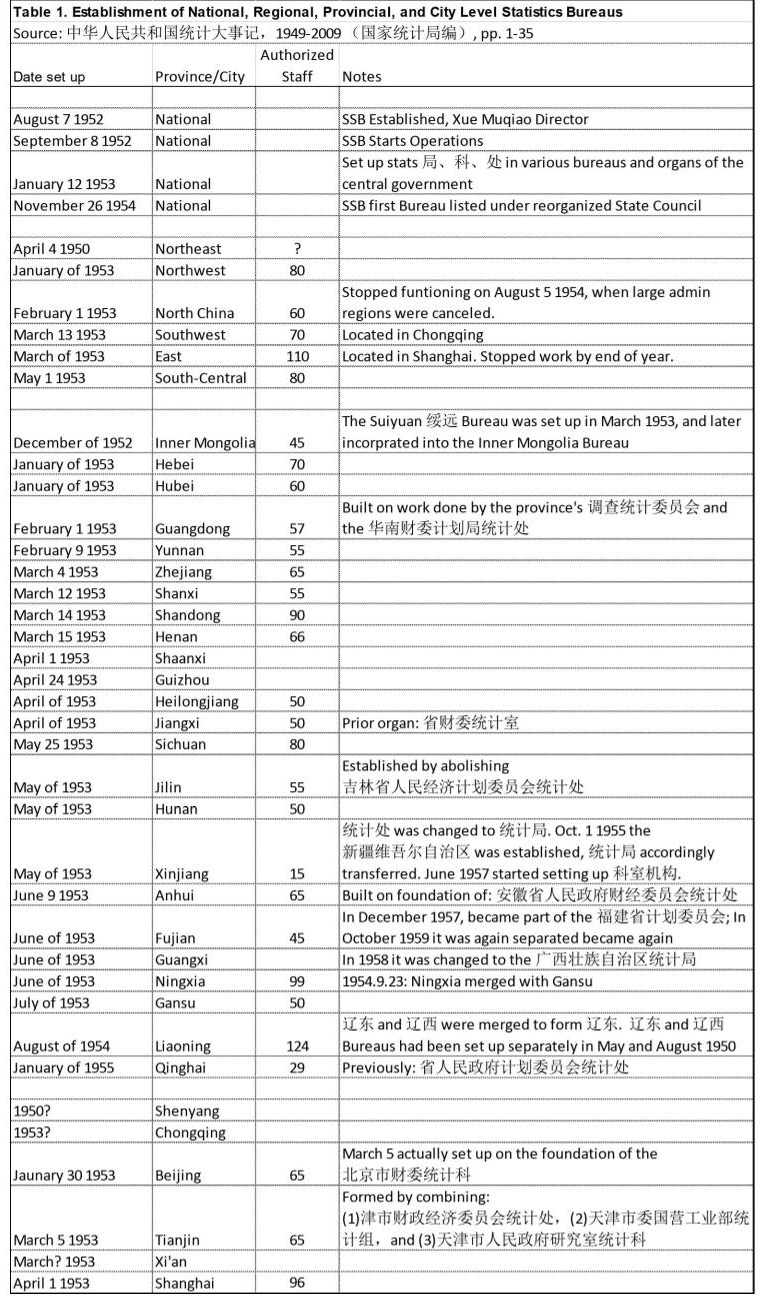
Furthermore, when complete enumeration wasn't feasible, they used sampling techniques that often resulted in inaccurate estimates. By assuming a single village represented an entire region, they introduced significant errors that compounded as the data moved up the chain of command. The State Statistics Bureau came in operation in September 1952. The Northeast region had already a statistics bureau, in the other five regions statistics bureaus started in 1953, likewise the provincial statistics bureaus.
Fig. 26.10 System of data collection
Source: Ghosh (2020). Page 150
Essentially, the pursuit of ideological purity led to a statistical system that struggled to accurately reflect reality. This resulted in data that was often unreliable, hindering effective planning and decision-making. This period reveals a critical lesson: even in the seemingly objective world of numbers, ideology can have a profound and detrimental impact. To solve problems, the State Planning Commission (SPC) of China enacted "Uniform Provisions for a number of Problems [Encountered] in Planning and Statistical Work," a six-page directive designed to rectify systemic and coordinative deficiencies between planning and statistical units.
The document of August 1954 identified several key issues:
Discrepancies in Inter-Unit Coordination: A lack of consistent interaction between planning and statistical entities resulted in incompatible data sets and compromised indicator reliability. Secondly, deviation from Central Directives: Subordinate administrative bodies frequently disregarded joint SPC and State Statistics Bureau (SSB) regulations, implementing localized and often contradictory modifications.
Thirdly, data Set Proliferation: The existence of multiple, unharmonized planning data sets within single units obscured accurate plan implementation assessment.
To address these, the SPC mandated several provisions:
● Enhanced Inter-Agency Collaboration: Statistical offices were required to align with corresponding planning committees at all administrative levels, with a defined data provision and validation protocol.
● Indicator Standardization: The congruence of indicator definitions and calculation methodologies across planning and statistical domains was emphasized, with national catalogues and classification schemes serving as normative frameworks.
● Conformity in Plan Implementation Monitoring: Statistical reporting and summary units were obligated to adhere to planning unit directives, particularly those pertaining to the National Economic Plan (NEP), and to utilize SSB periodical reports and survey estimates.
● Uniformity in Plan Implementation Methodology: Nationally approved numerical data was to be used for plan implementation verification, with a hierarchical data sourcing protocol for cases of data absence.
|6|Accounting...
In March 1950 two important decisions are made: March 3, 1950 Decision on Unified National Financial and Economic Work and 7 days later March 10, 1950 GAC Decisions on Procedures Governing the Unification of State-Operated Trade. The first decision aimed to unify the national financial income and expenditure,
to unify the dispatching of the national materials, and to unify the national cash management. The second decision aimed to unify the accounting system, because untill now the accounting systems within the business entities were very confused. Before 1949, China’s accounting theory and methods were heavily influenced by
Western accounting theories. The new accounting systems represented a hybrid approach, integrating scientific methods from contemporary Western accounting theory with elements of Soviet-type accounting. This unique blend was specifically developed to address the characteristics of China's state-operated economy and the country's financial management needs. At that time, a key objective for accounting professionals was to overhaul the existing business accounting and accounting systems, which were seen as "backward and confused" remnants of the old, private-ownership-based society. The goal was to transform them into an effective instrument for China's economic recovery and construction. Henceforth, China’s accounting went into a period of continuing revision, implementation, and introduction of the newest achievements of the Soviet’s accounting development.
During the First National Industrial Conference Meeting 12-02-1951 - 06-03-1951 , Li Fuchun defined the main tasks for promoting the accounting system. ● 1. Prepare detailed plans for production, labor, material supply, costs, and finances based on
planning forms issued by the GAC.
● 2. Conduct asset audits and determine enterprise capital in accordance with methods
stipulated by the GAC Financial and Economic Committee.
● 3. Establish reasonable and practical average advanced production quotas based on
production competitions and the anti-waste campaign—starting with fixed standards for
quality, quantity, material usage, and labor per product.
● 4. Develop and improve financial and cost management systems.
● 5. Improve statistical work by strengthening statistical organizations at all levels and the
grassroots record-keeping system, in line with the GAC Financial and Economic Committee’s
reporting requirements.
Accomplishing these tasks will lay a necessary foundation for implementing economic accounting.
From 1952 onwards, in succession, several directives on accounting were issued.
These systems changed the situation of different department issuing its affiliated state-operated industry business’ accounting system, and realized the setting up of the
unified accounting system by different national economic sectors.
In January of 1954, the Ministry of Finance issued the Unified Accounts and the Patterns of
Accounting Statement for State-Operated Industrial Enterprises and the Simplified Unified Accounts and the Patterns of Accounting Statement for State-Operated Industrial Enterprises to enable different businesses of different levels and sizes to use different accounting systems for each industrial
sector such as manufacturing, agriculture, banks, transport and trade. This changed the method of every business employing one
set of accounting system. The early PRC years saw a rejection of Western accounting, branded as "capitalistic" and inappropriate for a socialist nation. Consequently, only Soviet-style socialist accounting was permitted in higher education. This ideological shift was quickly institutionalized. Throughout the 1950s, newly formed financial and economic colleges nationwide replicated Soviet teaching plans and curricula, from fundamental accounting principles to financial management. Textbooks largely consisted of Soviet translations or adaptations.
Despite the CCP’s efforts to introduce the Soviet economic accounting system in the early 1950s, Western accounting practices persisted in regional state enterprises. As of 1954, these enterprises still used the Western system to calculate product costs. Ironically, the CCP’s push for Soviet accounting may have reinforced the local commitment to cost reduction.
The "Sovietization" of China's educational system was cemented by a major reform in 1952. Russian experts were instrumental, particularly at the People's University of China, where they helped establish the Accounting Group. All Western accounting textbooks were systematically replaced by Soviet models, integrating accounting education into the national central planning framework. Beyond traditional university settings, on-site training for accounting professionals became common. By 1953, universities offered various adult education options, including specialized courses, night schools, and correspondence classes, leading to a comprehensive two-level system by 1956. This era also witnessed the downscaling or elimination of management education. The new system produced accounting graduates trained in a "very rigid process," characterized by standardized charts of accounts and prescribed financial statements, specifically designed to meet the highly specialized demands of a planned economy.
Fig. 26.11 shows how the system was completely modified and changed into a Soviet-style accounting system due
to implementing a centrally planned economy and learning from the Soviet Union.
Fig. 26.11 Causal Relationships Between Environmental Factors and China’s Accounting
Development (1949-1957)
Environmental Factors
Examples
Causal Analysis
Effects on accounting
Political
The establishment of the
Ministry of Finance
13 sectors’ unified accounting
systems, were issued;
Western accounting theory
and practice was eliminated.
Only the Soviet style of
socialist accounting was
allowed for teaching and
learning in universities and
colleges.
The foundation of the PRC.
The instructions of drawing
up the uniformed accounting
system issued by Financial
and Economic Committee
(FEC) within the Central
Government.
Learning from Soviet Union;
The setting up of socialist
system and thought reform;
Western accounting was
thought to be capitalistic
accounting, which served only
capitalists and was not suitable
for a socialist country.
The
direction of
accounting
developmen
t should
serve for the
socialist
planned
economy
International
The object of accounting
report is the state’s plan
department.
The implementation of the
first five-year plan.
Accounting
Style and
practice
Economic
The issuing of Standard
Accounts Plan and the
Patterns of Accounting
Statement for Basic
Transactions of Private and
Public Cooperated
Industrial Enterprises
Belonged to the Central
Administrative Department
(Draft).
To respond the realization
of the private and public
cooperation in 1956.
The
contents of
accounting
system and
accounting
method
Culture
Experience of China’s
accounting and the thought of
Soviet accounting were
integrated into the newly
established accounting
system.
Part of accounting methods
were inherited from the old
society
Accounting
Method
Legal
No legislature
Educational
Students were taught a very
rigid process copies from
Soviet and training programs
to meet the specialized
occupational requirements of
a planned economy
Learn for Soviet Union
Accounting
Theory and
practice
Professional
No professional body
Source: Zhang (2005). Pages 81-82
|7|Other prerequisites...
Not only efficient statistic and accounting systems were necessary for the realization of the Five-Year Plan, but also that an adequate number of specialized and scientifically educated personnel were available. The education of specialists was therefore given high priority. Alongside a strong belief in the power of statistics, science, and planning, there was an equally firm conviction in the benefits of specialization. Much like in traditional China, the challenge was seen as attracting talented individuals, but talent was now redefined as technical competence. Cadres were encouraged to develop specialized skills, and older cadres were cautioned that the government would no longer require those who lacked the specific expertise needed for their roles. The technician rose to prominence as a new cultural ideal. This represented a vision of modern science and society, marking a significant shift away from a "guerrilla mentality." See Chapter 5.
China's health system, modelled after the Soviet Union, emphasized urban specialist concentration. The initial plan targeted significant growth in hospital beds and doctors. See Article 48. Integrating traditional medicine, with its vast practitioner base, was difficult, encountering resistance from Western-educated doctors. See Article 48. The government's strong 1954 criticism forced a shift. Industrialization also necessitated substantial housing construction, (see Article 45) with plans for 46 million square meters. The 1954 Constitution further demanded the expansion of social security. See Article 32.
The 1953 census, revealing a population exceeding 580 million and rising unemployment, forced the Chinese leadership to address family planning. This represented a significant policy shift, as the CCP had previously rejected birth control, attributing population-food imbalances to feudal or bourgeois economic failings, in line with Marxist theory. See Article 48.
Initially, large administrative regions were created to link Beijing with the provinces. However, they began to exhibit increasing centrifugal tendencies, even after the transfer of influential regional leaders to Beijing. To solve this problem and strengthen central control, the eventual dissolution of these regions was considered necessary. See Article 14.
To support agricultural and industrial growth, plans were made to expand transportation and communication infrastructure. This expansion aimed to ensure food and raw material supplies and integrate the nation through inland railway construction. While political and strategic factors were present, the railway's primary purpose was to connect new inland industrial centres to existing urban conglomerates. See Article 36.
Chen (1967). Page 21 "Foreign capital in China was invested only in the Treaty Ports, which were either coastal or river cities. The foreign powers did not demand the right of operating factories in the inland areas, largely because transportation was inadequate and the cost of shipping was prohibitive. Chinese factories were also concentrated in the coastal and river ports because of the existence of an infrastructure there. Consequently, industries were very unevenly distributed geographically, with the coastal provinces, which comprise only 10 per cent of the total land area, producing 77 per cent of the gross value
of factory output in 1949"[↩][Cite]
Cannon (1990). "... China is an enormously intricate patchwork of social and economic variation, not easily subsumed into a few large regions. The use here of the three simplified regions designated by China is inadequate, and needs to be qualified so as not to assume too much similarity within them. For instance, income differences can vary greatly over quite short distances (even between neighbouring villages). It is evident (...) that some counties less than 250 km
from Shanghai, in what is often considered the 'wealthy' Coastal region, are amongst the poorest in the country. Conversely, some of those which have highest per capita
agricultural incomes are in Tibet and Xinjiang, which are part of the 'poor' Western region" Page 5 [↩][Cite]
05-02-1949 Chen Boda Do Not Disrupt the Original Enterprise Structure Chen Boda's speech provided a blueprint for the early stages of socialist industrialization in China. It reflected the pragmatic approach of the Chinese Communist Party, balancing the need for radical transformation with the practical requirements of economic development. This approach has had a lasting impact on China's industrial policy and economic planning. [↩]
30-07-1955 First Five-Year Plan For Development Of PRC-1953-1957. "We should, in accordance with the fundamental task of the state during the transition period, gradually lead handicraftsmen by persuasion on to the road of co-operation in the first five years and by giving them practical examples and state aid so that the handicraft producers' co-operatives will become able assistants of state industry." Page 110 [↩]
Eyferth (2003). Page 117 Handicrafts can be defined as those methods of production which are using manual rather than mechanical power, employing simple implements and tools, and making use of traditional production processes.
[↩][Cite]
Zhang (2025). Pages 23-27 Despite the embargo, "At the time, many Hong Kong merchants marketed these mainland-produced goods under their own brands, rebranding them as Hong Kong-made for profit. Interestingly, even American troops stationed in the Far East and transnational merchants regularly procured Shandong drawn work products and labelled them as Hong Kong-made for shipment to the United States." Page 25[↩][Cite]
Eyferth (2003). He also remarks "Most paper factories in coastal China had been destroyed in the war, and the outbreak of the Korean War stopped all paper imports into China. At the same time, the government needed large amounts of paper to inform the population about its aims and mobilize people for political campaigns. As delegates from Sichuan's paper industry were told at a conference in Chongqing, “Paper is one of the indispensable weapons [in the movement to resist America and aid Korea]. We have to mobilize the greatest enthusiasm and energy to fulfill this most historical, militant, internationalist glorious production task.'" In Sichuan, most of this "glorious production task" was of necessity shouldered by handicraft producers. In the Western Sichuan (Chuanxi) district, only 9 percent of the paper output came from modern factories, against 86 percent from Jiajiang workshops and 5 percent from rural workshops elsewhere in Sichuan. For the next several years, the mechanized paper industry proved unable to meet production targets, whereas the handicraft producers easily overfulfilled theirs."[↩][Cite]
Chen (19). Page 11 "As with agriculture, the scarcity of capital and the abundance of labor available to the handicraft industry led to the use of labor-intensive methods and destroyed the incentive to introduce labor-saving improvements." Page 12 [↩][Cite]
Schran (1964). Pages 153-154 "From the beginning, the Chinese Communists added subsistence handicrafts to
agriculture and handicraft workshops to industry, thus limiting the statistical category handicrafts to individual handicrafts. During the course of Socialist transformation, the category handicrafts covered both individual and collective forms of organisation. Furthermore, only handicraft production co-operatives were listed separately in aggregate
statistics as fully collectivised forms, while joint tool groups, handicraft marketing co-operatives, and small handicraft groups were still included among individual handicrafts. Finally, with the transition to co-operative handicraft workshops or " factories," the category handicrafts disappeared altogether statistically, and handicraft production cannot be separated any more from industrial production since 1958." Page 154 [↩][Cite]
"The development of local industry should mainly rely on locally accumulated funds, with private investment also welcomed. To encourage local initiative and promote the rational development of local industries, the central government should provide support under suitable conditions: 1. Surplus production equipment owned by the state can be allocated—based on local
construction plans—for use in local industrial development. Local governments would either
pay annual depreciation fees or treat this as a form of state investment in local industry.
2. Technical guidance and assistance should be provided by the central industrial ministries.
3. Trade departments and banks should offer as much support and assistance as possible to
local industries.
4. Profits from local industries should, for a certain period, be exempted from being turned
over to the state treasury, and instead be used for expanding reproduction and
reinvestment.
5. A leadership system for local industry should be established, to strengthen both policy
guidance and management support. "
Hirata (2024). "The Northeast Statistical Bureau, established in Shenyang in April 1950, was the first major statistical bureau in the PRC and played a major role in systematically introducing Soviet statistical methods to China.34 Manchuria became a model for economic planning in the early PRC." Page 109 [Cite]
Fig. 26.13 Establishment of National, Regional, Provincial, and City Level Statistics Bureaus
Zhang (2005). In the new liberated areas, some companies, which were taken over by the People’s government, continued employing the accounting system issued by the Resource Committee of GMD government, and some of the others employed the American, English, or Japanese accounting methods. Page 76 [↩][Cite]
Zhang (2005). Pages 76-77 Accounting typically focuses on financial information and on specific units to ascertain information, such as capital stocks, profits, yields, costs, and so on [↩][Cite]
For example: The Accounting Systems for State-operated Industrial Enterprises, State-operated Construction Business and State-operated Contract Enterprises, as well as The Accounting System for State-operated Supply and Marketing Enterprises, Agricultural Business, as well the Enterprises of Commerce, Railway, Transportation etc. were published.
Bian (2015). For example "Even as Guizhou’s regional state enterprises strove to adopt the Soviet model of enterprise management, they continued to rely on pre-1949 accounting practices for keeping records and calculating costs as late as the mid-1950s." Pages 337-338 [↩][Cite]





 05-02-1949 Chen Boda Do Not Disrupt the Original Enterprise Structure

 Article 26
